
















Cutle is a quick shape-cutting puzzle where one precise slice challenges your balance sense, spatial logic, and steady hand.
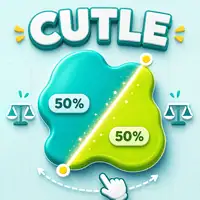
Here's a quick look at the game:
Cutle looks harmless at first: a clean shape, an empty screen, and one little cut line. Then you release your slice, see the ratio, and suddenly realize your eyes may have been lying to you the whole time. That is the charm of Cutle—a tiny geometry challenge that turns one simple action into a surprisingly tense test of judgment.
What is Cutle?
Cutle is a minimalist shape-cutting puzzle game where your goal is to divide a shape into two nearly equal parts. The target is a perfect 50:50 split, but Cutle gives you some room to breathe: a 48:52 ratio or better counts as a win.
There is no huge fantasy world or complicated story here. The “world” of Cutle is a calm puzzle space where every shape becomes the main character. Some shapes look balanced, some look suspicious, and some seem designed purely to make your brain argue with itself.
How to Play Cutle
Cut as Evenly as Possible
In Cutle, you draw one straight cut through the shape and try to split its area evenly. You can cut from any angle, so the challenge is not just finding the center—it is finding the smartest direction.
A vertical cut might work for one shape, while a diagonal slice may save you on another. Cutle rewards players who can judge visual weight, not just surface appearance.
Game Controls
- Mouse: Click and drag to draw your cut line
- Touchscreen: Tap and drag across the shape
- Release: Confirm the cut and reveal your ratio
Cutle Strategy and Tips
Think About Shape Weight
Do not only compare left and right length. In Cutle, a short but chunky corner can matter more than a long thin section. Imagine the shape as a solid object with weight on each side of your line.
Avoid Rushing the Slice
Cutle feels quick, but rushing usually leads to messy cuts. Before releasing, check whether both sides look equal in total area. A tiny angle change can move your result from a near-perfect split to a painful miss.
Use Diagonal Cuts When Needed
Some Cutle shapes are awkward on purpose. When the shape has extra mass in one corner, a diagonal line can balance it better than a straight middle cut.